why you shouldn’t worry about buying organic

Vegetable photo

Blasphemous as it may seem coming from me, I am going to say it and stand by it. I don’t think you should worry about buying organic.

Let’s clear up some things from the start: I think organic is better, I buy it when I can. So if that is the case why would I tell you not to worry about it? Simple it really is more expensive and if your bank account says you can buy real food, but can’t afford organic then I would vote for buying real food over cheap crap.

There are a lot of news stories and opinion pieces that demand we all buy organic and that is great if you can afford it, but I can’t afford it every week so I buy the best food I can afford.

When we moved from California things changed in our buying patterns, we had less money because of a change in jobs. This forced me to rethink my position on this. Here are my thoughts: I feel strongly that we should eat the best food we can afford, we should grow our food in a way that is good for the earth, and I don’t know all the answers about what is good for the earth and quite frankly neither do you. There is so much information out there that it can be hard to disseminate it all and come to an answer that is bullet-proof. I personally am done trying. I am doing the best I have with what I can and making rational changes where I see fit.

3 reasons you shouldn’t worry about it

  1. the nutrients are the same apple vs organic apple - an apple by any other name is still an apple. Nutrients of the fruit do not improve because it is organic. The only thing that might make organic better for you is the lack of pesticides. A huge difference sure, but know that spending more money on organic isn’t giving you more vitamins and minerals. I get the same amount from the conventional produce I eat.
  2. it isn’t budget friendly - It really does cost more to eat organic. It doesn’t cost more to eat well though. I can still eat and cook good food without breaking the bank, but to cook 100% organic is out of my range. I can justify being poor to put organic on the table. My priority is good food I can afford and that is better than eating junk I can afford.
  3. natural pesticides may not be any safer - We just don’t know about the options yet. Organic doesn’t mean pesticides aren’t used it just means that they are natural versus chemical. Some of those options have been as damaging to the environment even if they are better for us.

5 things you can do instead of buying organic

  1. join a csa or go to the farms market - Joining a CSA, (community supported agriculture), or shopping at a farmers market is a great way to speak with your dollars. Buying local puts your money in the hands of farmers that care about what they are growing. If you are at the market you can even ask the farmers about how they grow the produce. You might be surprised to find that some of them don’t use pesticides even though their fares aren’t labeled organic. That organic label is expensive to get so some farmers opt to skip it and that means they don’t have to pass that cost on to you.
  2. eat less meat - The meat industry is an area that needs the most change. Voting with your dollars has proven to be one of the best ways to change that industry. Your voice and dollars made it so McDonald’s announced they are transitioning to chicken not raised on antibiotics. Which prompted Costco to do the same. If the meat you do buy is organic and at the least antibiotic free you are sending a message and they are starting to hear it. We haven’t quite managed this one yet, but I am working on it.
  3. buy organic from the dirty dozen list - Tests have been done on how much pesticides are found in fruits and veggies. Which helped with the creation of the dirty dozen. A list of 12 fruits and veggies that have been shown to absorb more pesticides than others. So if you can’t afford all organic that is okay, just try to stick to organic for these items. There is also a clean 15 list of produce least likely to have pesticides. Buying organic on these items is not worth the extra cash.
  4. educate your friends - It would be nice if the quality of the food options improved, but it really takes voting with our dollars. Spread the news with friends so they start buying better quality food and the message will continue to be sent that we care about what we eat. If customers won’t buy it they won’t sell it. It is a long process, but it is that simple.
  5. get involved in local movements - No matter where you live there is a some food movement demanding better food choices. Get involved. Be vocal locally. If you sit on your couch and don’t do anything change isn’t going to happen. You have to make your opinions heard. Either through your voice or your dollars. If you don’t have time, but can donate money, do it.

What is the biggest deciding factor in what you buy when you go grocery shopping?

does the nba really care


As a sports fan that is married to an avid sports fan I watch my fair share of sporting events and ESPN. I have noticed something that I find a bit contrary.

Both the NBA & the NFL have outreach programs geared towards public health and exercise. The NFL has Play 60 which is a program to encourage physical activity in kids and to promote healthy eating. The NBA has NBA Cares which is an organization that in their words, “addresses important social issues such as education, youth and family development, and health and wellness.”

These groups require generous donations of time and money on the parts of the players and the leagues. While they certainly get a great personal reward from helping, it is also about the public image of these organizations. Maybe I am a little cynical, but I think any organization that spends advertising dollars to talk about the good deeds they do is working a public relations angle. Which is fine because my beef isn’t with the fact that these amazing acts aren’t done 100% altruistically. Showing positive role models for both kids and adults is important and probably makes a great impact when a popular sports figure is involved.

Seems that if the NBA really cares and the NFL really wants you to properly fuel up to play then they should be paying attention to the mixed messages their organizations and their employees are sending.

Athletes doing commercials for soda, fast food and unhealthy snacks doesn’t fit with the message these organizations are trying to send to kids. Kids aren’t able to distinguish that LeBron, and other athletes, is just advertising and isn’t actually eating at McDonald’s. Hell, some adults probably believe athletes are heading through the drive-thru and picking up a Big Mac and a large Sprite on the way home from practice. I am guessing LeBron isn’t hitting up McDonald’s and probably doesn’t have his fridge overstocked with LeBron mix Sprite. If I had to guess, I would guess his kids either don’t get soda or only have it in very small amounts because he knows it isn’t good for them. I also don’t believe he drives a Kia to game night, (he did used to ride his bike so maybe he is just that frugal) but that is a different ethical issues as his influence over car buying isn’t having a negative impact on the health of America.

Athlete endorsements of Gatorade put that drink on the map. Which is understandable since it was developed for them, for the purpose of rehydrating them during times of intense exercise. Its intention was never to replace water for them or anyone else. It was to quickly replace a loss of fluids in the Florida Gator athletes and later all athletes. Allegedly the heavy sodium and potassium, both needed for proper hydration, in the drink made an unpleasant taste so they added sugar to make it tolerable. Not a huge concern for athletes because they would use the extra calories, or energy, in the course of a game or a workout. The kid on the couch isn’t working that off playing Madden. Sugar drinks have the largest impact on the current obesity crisis in the country. Obesity affects 17% of children and adolescents, ages 5-19, according to the CDC.

If the NBA and NFL players took the time to think about the impact they have on the children in this country before they decide to make a buck it could have a positive impact. The biggest impact would certainly come from them speaking out against sugar drinks, fast food and junk food in general. Choosing not to use their image to sell junk to the fans would just be a nice first step towards a positive change and a lot less hypocritical when they show up at an event and tell kids to eat their vegetables so they can grow up to big and strong.

what happened to the food network?

When I was in college food network was in its infancy and the term celebrity chef was a few years from being part of the daily lexicon. From years of watching the food network I learned a lot, branched out and tried new foods, and became more confident in the kitchen. Some place down the road a lot seems to have changed with celebrity chefs and food programing on television.

The chefs on the food network used to seem so passionate about teaching us about food. Every time I tuned in I felt like I had been personally invited to the kitchen to learn how to make their favorite dish. It was the next best thing to learning in the kitchen with my mom. Alton Brown taught me about the science of food, Bobby Flay taught me how to grill, Emeril taught me to try and enjoy my time in the kitchen and there were other chefs that left an impression on me. Even Rachel Ray, who had less prior cooking experience taught me how to make quick meals.

Now food programming across all channels and even HGTV seem to have succumbed to a sensationalist style that focuses on competition and is more about personality than substance and teaching.

Because of those early chefs I believed that all chefs cared about what people ate. I believed they wouldn’t endorse products they wouldn’t themselves use. When I see Rocco DiSpirito and Carla Hall endorsing Kraft Recipe starters.

Screen-shot-2013-08-13-at-2.57.10-PM

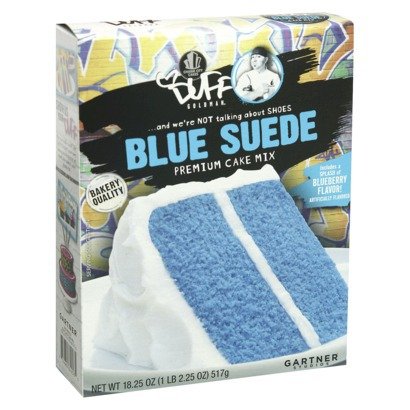
Duff’s face on a boxed cake mix, icing and ice cream it makes me come unglued. The box claims it is bakery quality. Nothing about the ingredients in that cake are bakery quality. 14772620_201310260914


I feel strongly that people should learn to eat well and take care of themselves and that should involve the smallest amount of process food you can muster. When the chefs that put themselves out there as people who know good food start talking about how easy Kraft recipe starters it makes teaching people about real food even harder.

If they decide to endorse products I wish they had higher standards. They don’t all have to be Jaime Oliver and champion the cause of people eating better, but it would be nice if they didn’t perpetuate a problem they were at one point actually helping to solve. Getting people who are afraid of the kitchen into the kitchen is the first step to a healthier life and they were good at that once.

Do you think that celebrity chefs have a responsibility to their fans? Should they be helping to educate people on eating properly?