wit wisdom & food

connecting with food

  • home
  • & food
    • recipes
  • & running
  • & gardening
  • & life
  • & travel
  • & politics
  • about

feeding kids peas

April 20, 2018 by anne Leave a Comment

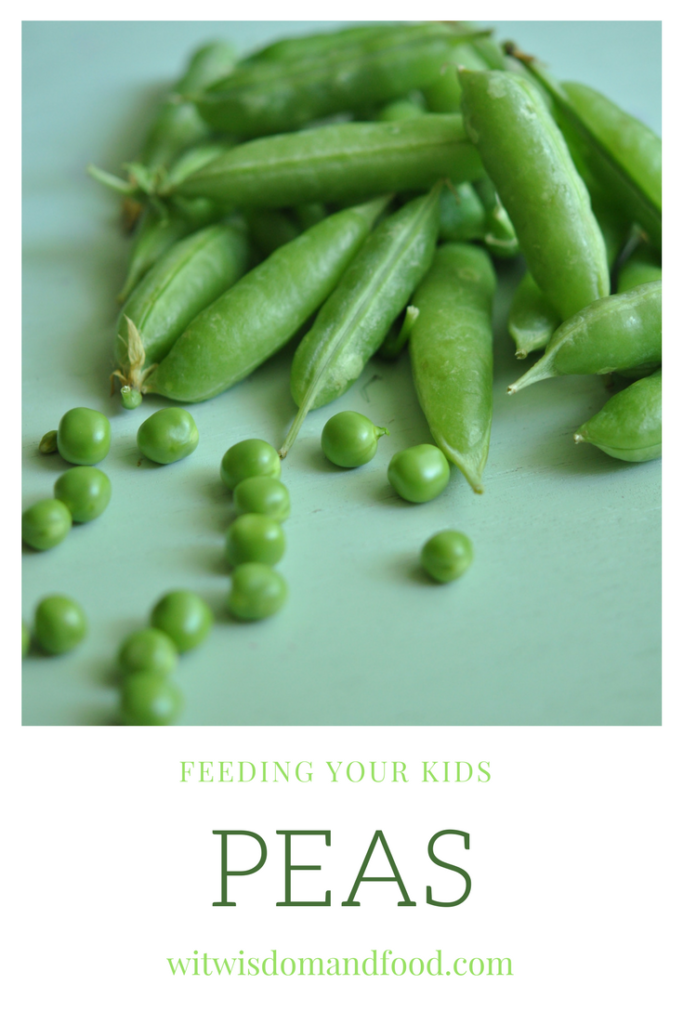
feeding kids peas

About Peas

When you hear do you like peas? do you immediately think of frozen or canned peas mushed up and soggy on the plate? Do you forget about snap peas and snow peas that end up in a stir-fry? There are so many kinds of peas that a blanket statement of my kid hates peas might not be accurate.

So what are the differences between all the peas? The gist is there are garden peas, snow peas and snap peas. Snap peas are a cross between the snow and garden. Garden peas, you shell them and only eat the sweet round pearls inside. Snow peas have tiny unformed pearls and you eat the entire pod. Because snow peas are so thin they work well in a quick cooking stir-fry. Snap peas are my favorite and you eat the entire pod in one wonderful bite!

About buying and cooking peas

With such a variety of peas, there are all kinds of possibilities to get your kids to eat and enjoy peas. I would personally never touch canned peas. They tend to be overcooked and without flavor. No one will probably like those. Frozen peas are an easy staple in the fridge and easy to steam. Adding herbs, garlic or some lemon will give them a little more interest than just plain old peas. To get fresh peas to shell yourself the best bet is to grow your own or get to the farmers market early in the spring. Sugar snap and snow peas are usually in the produce section year-round at your grocery store. They do grow better during the cooler parts of the year so depending on where you live that will be the best time to get them fresh at your farmers market.
feeding kids peas

Feeding kids peas through the years

6 months - 1 years

  • pea puree
  • pea puree with mint
  • pea puree with basil

2 years - 5 years

  • pea hummus
  • snap peas dipped in sauces - peanut sauce - yogurt dill dip

6 years - until you stop cooking their food

  • fresh cooked peas with mint
  • veggie stir fry with snow peas

Filed Under: food, ingredients, parenthood Tagged With: feeding kids, peas

how to use lemons

June 30, 2017 by anne Leave a Comment

When life gives you lemons make lemonade. That isn’t all that lemons are good for. They are a perfect little fruit that cooks and cleans. Lemons are a staple in most kitchens and the versatility of this fruit and its relaxing fresh smell make it the perfect scent for so many kitchen cleaning products. First and foremost lemons are key to cooking and not just desserts. Though lemon meringue pie, lemon curd, and lemon bars are some favorites lemon has a strong role in cooking chicken, fish, and vegetables. It was the main source of citric acid before the process was sent to the lab.

As for cleaning you can reach for a lemon to get stains off your plastic storage containers, shine up your copper pots and pans (if you are fancy enough to have such a things), as well as bleach stains, disinfect surfaces, and just make your home smell good.

Season - You can find U.S. grown lemons year round. Most are grown in California with the main harvest happening in winter through early summer. During the other times, you may find them coming from Arizona, Florida, or Texas.

Buying - Look for lemons that are heavy for their size. A tiny lemon that feels heavy compared to the large lemon will have more juice. Lemons are frequently sold individually, instead of by the pound which may make you want to buy the biggest lemon on the table, but resist the urge. Instead look for the heaviest lemon to get your money’s worth. Stay away from lemons that look dull and dry.

Storing - lemons do just fine on the counter. If like me you tend to buy more than you need for a week you can put them in the crisper of your fridge to extend their life and save you the torture of wasting food.

Pairs well with - lavender, chicken, fish, herbs, blueberries, and garlic

Recipes:

  • Lemon and Arugula Rigatoni - A Couple Cooks
  • Vintage Lemonade - this takes a little longer to make, but it is delicious
  • Skillet-Roasted Lemon Chicken - Ina Garten this is a favorite recipe of mine that I make a couple of times a month
  • Lemon Squares with Lavender & Limoncello - Grab a Plate

Filed Under: ingredients Tagged With: lemonade, lemons

how to store bell peppers

September 14, 2015 by anne Leave a Comment

how to store bell peppers

how to store bell peppers

Bell peppers have been a staple in our diet since we did the Whole 30. They seemed so easy to cut up and eat as a snack, dice up in pasta sauce or put in eggs in the morning that I have kept them on hand since. Plus bell peppers come in a variety of colors so they add a nice pop of color to a dish. The most common are green, red, orange and yellow. Other varieties you can find are purple, white and brown.

Green peppers are an unripe red peppers making red peppers a pepper that is at the end of its shelf life. For that reason green peppers keep longer than red peppers.

Red, yellow and orange peppers are a bit sweeter than green peppers. I prefer to make stuffed peppers out of red because of the sweetness.

Green bell peppers are a staple in Cajun cooking. Instead of mirepoix; carrots, onion and celery Cajun cooking uses the trinity; green bell peppers, onion and celery. Any gumbo or jambalaya recipe should call for these three things.

Season: July-November is when peppers are in season and will taste the best, especially if the are home-grown. They, however, can be found year round at the grocery store.

What to look for when you buy: Regardless of the color of pepper look for peppers that are firm to the touch. Smooth shiny skin, no wrinkles and no blemishes.

How to store: Peppers should be stored in crisper drawer of the fridge for the longest shelf life.

How to cut them: Cut the top off, Cut the bottom off, cut through one side. This will make it easier to remove the seeds and white membranes in the center.

Links to some great recipes I want to try:

  • Bell Pepper Egg-in-a-Hole from Natasha’s Kitchen
  • Quinoa Stuffed Bell Peppers from Damn Delicious
  • Vegetarian Nachos from Closet Cooking
  • Mini Pepper Chicken Nachos from Sweet Pea’s Kitchen
  • Philly Cheesesteak Stuffed Peppers from Mrs. Happy Homemaker
  • Springtime Farro Salad from Proud Italian Cook
  • Pickled Peppers from No Recipes
  • Canned Roasted Red Peppers from Jane’s Adventure Dinner
  • Red Pepper & Mozzarella Stuffed Chicken from Barbells and Bellinis
  • How to Roast Peppers from Alexandra Cooks

Filed Under: ingredients, Uncategorized

how to store and eat cilantro

August 10, 2015 by anne 7 Comments

Cilantro is a love or hate herb. There is rarely a middle ground found when people are talking about cilantro. Some, like myself, love its citrusy flavor and others swear it tastes like soap. Studies have been done that link the difference in taste to a genetic disposition. If you don’t like cilantro it might not be your fault. You might have just been born a cilantro hater. For you I can offer only condolences. For the lovers of cilantro how about some tips on how to store and eat cilantro?

I really like cilantro. Like I could put it on damn near anything. I always try to have a bunch on hand in the kitchen. My love for it is a kind of chicken or an egg situation. Do I like cilantro because I like Mexican food or do I like Mexican food because I like cilantro? Which came first? The more fresh-cut cilantro on my tacos or in my guacamole the better. In my opinion, a street style taco with meat, onion and cilantro doesn’t need anything else except maybe a squeeze of lime. The natural citrusy flavor of cilantro makes pairing it with lime a great combination. My new favorite use of this combo is coconut lime cilantro rice. It makes my mouth water just thinking about these dishes.

Cilantro facts:

  • Cilantro goes by many names such as Chinese parsley, dhania, and coriander.
  • In North America the leaves of the herb are commonly referred to as cilantro and the fruit, or seeds are called coriander.
  • The seeds have much more of a citrus flavor when crushed. You can purchased ground coriander or seeds in the spice section.
  • Used largely in Asian and Latin American cooking.
  • Frequently mistaken for curly leafed parsley.

Season: year round

Where to find it in the store: Found in the produce section it is typically sold in bunches. Some stores will have it prepackaged in bags or plastic cases though that is less common. I prefer to buy mine in bunches because I find it easier to store which means it lasts longer

What to look for when you buy: Bright green leaves that are not wilting, or browning.

How to store it: Treat your bunch of cilantro similar to a bouquet of flowers. Place the stems in a jar of water. For maximum shelf life cover the jar with a plastic bag and a rubber band and place in the fridge. I use mine fairly quickly so I skip the plastic bag step and have been able to store my bunches for just over a week in the fridge. If I know I will use it in a couple of days I just keep it on the counter. For best results change the water every couple of days.

If you do find cilantro in a plastic bag, or storing in a plastic bag is easier for you, you can keep it in a plastic bag in the fridge for a week.

When ready to use: Rinse the sprigs of cilantro with water and pat dry. Then, simply chop up as much as you need for the recipe. Both the stems and the leaves are edible. A whole sprig also works great as a garnish.

Links to some great recipes:

  • Not just one but many from 101 Cookbooks
  • Parmesan Cilantro corn from Real House Moms
  • Cilantro Pesto, yes please! from Simply Whisked
  • Cilantro-Lime Popcorn from Bake Your Day


Are you a lover or a hater of cilantro?

Filed Under: ingredients Tagged With: mexican food, tacos

how to eat and store rhubarb

June 5, 2015 by anne 1 Comment

After you find out the fun facts about rhubarb you will get my favorite recipe for rhubarb

Rhubarb: Once I had my first rhubarb tart I was hooked. I savor rhubarb as a spring ingredient. Though you can find it in the winter because it is a cold winter crop I prefer it with strawberries so I wait until those two season overlap. I had a pleasant surprise this spring when a strange plant started sprouting in a corner of my yard. I was so excited to realize that it was rhubarb. I waited patiently for it to get big enough to harvest and through it into a crisp. If you want to have it in the winter try is as a pear rhubarb crisp when pears are at their height. It is another delicious combination.

Season: late winter-early summer, height of the season is April-June

What to look for when you buy: Cherry red stalks and green leaves (if the leaves are still attached) will indicate field grown rhubarb vs hothouse rhubarb. Field grown supposedly has a stronger flavor. The stalks should be crisp like celery and not flimsy when you pick it up.

How to store it: It doesn’t last long so buy or pick it the day you are going to use it for best results. You can wrap it tightly in a plastic bag and it should hold for 3 days.

How to prepare it: Because of its extreme tartness, think sour patch kid on steroids, it will need lots of sugar. Either add a large amount of sugar or pair with a very sweet ripe fruit like strawberries.

Links to some great recipes I want to try:

  • French rhubarb cake
  • Skillet Chicken with rhubarb
  • Rhubarb lemonade
  • Grilled fish with savory rhubarb sauce
  • Rhubarb lentil soup

My favorite recipe for rhubarb:

strawberry rhubarb crisp
Print Recipe
  • Coursecrumble, dessert
Servings Prep Time
4 people 30 minutes
Cook Time
45 minutes
Servings Prep Time
4 people 30 minutes
Cook Time
45 minutes
strawberry rhubarb crisp
Print Recipe
  • Coursecrumble, dessert
Servings Prep Time
4 people 30 minutes
Cook Time
45 minutes
Servings Prep Time
4 people 30 minutes
Cook Time
45 minutes
Ingredients
filling
  • 3 cups halved strawberries
  • 3 cups diced rhubarb
  • 1 1/4 cups sugar
  • 1 Tablespoon lemon juice
  • 5 teaspoons cornstarch
  • 1/2 teaspoon salt
topping
  • 6 Tablespoons unsalted butter room temperature
  • 1/4 cup brown sugar
  • 1 cup all-purpose flour
  • 1 cup crushed ginger snaps
  • 1/2 teaspoon salt
Servings: people
Instructions
  1. preheat oven to 375 degrees
  2. Combine filling topping and stir until mixed well and transfer into a buttered dish, preferably an 8-inch square
  3. In a large bowl, use a mixer, beat butter and brown sugar on medium until light , fluffy and blended.
  4. Add flour, crushed ginger snaps and salt. With your hands mix until pea-sized pieces form.
  5. Scatter over the top of the filling and bake for 30 minutes. Tent loosely with foil and cook for 10-20 minutes more, until center is bubbling.
  6. Let cool for 20 minutes before serving
Share this Recipe
Powered byWP Ultimate Recipe

Filed Under: ingredients, recipes

get to know ricotta cheese

May 26, 2015 by anne 1 Comment

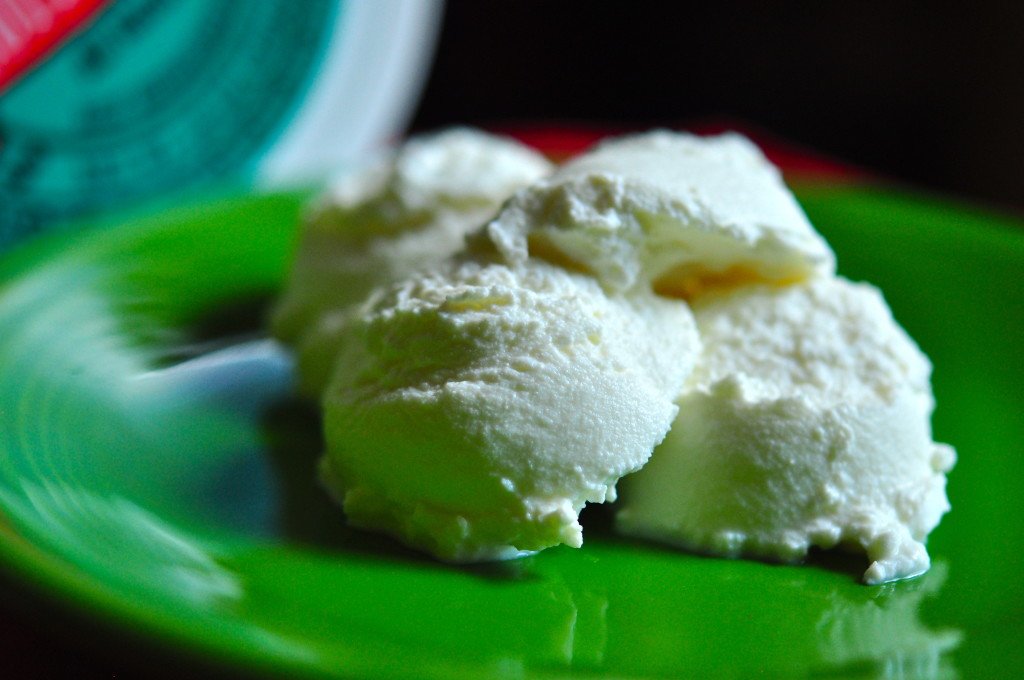
ricotta cheese

Ricotta cheese is mostly thought of as an ingredient in lasagna, but do you know any more about it than that?

The word ricotta means recooked. This comes from the fact that ricotta is made using the whey that is a by-product of the making of other cheeses. Cheeses like the Italian favorite mozzarella. Italians make a lot of cheese and have for years. Disposing of the amount of whey left after an epic session of cheese making was an issue. Out of a problem comes a tasty solution.

The American version adds a bit of milk to the whey to get the wetter, and creamier ricotta you are familiar with at the grocery store. For this reason, some traditional Italian recipes you may suggest straining your cheese so it isn’t as wet. It will be mentioned if needed, but keep it in mind if your dish comes out more running than you anticipated.

DSC_1908

Fun facts

  • Not technically a cheese because there is no starter, bacteria to make cheese, or rennet, an enzyme used to thicken cheese, is used in ricotta making. Because of this ricotta is considered a dairy product instead of a cheese.
  • Due to a short shelf life, some ricotta can be processed further to increase shelf life. Ricotta Salata, a firm salted variety; ricotta infornata, is placed in the oven to give it a brown crust; ricotta affumicata, is put in a smoker for a grey crust and smoke flavor; ricotta forte is all the leftover ricotta fermented for about a year making a pungent spreadable cheese.
  • If you can’t get ricotta for your lasagna you can put cottage cheese in the food processor, drain off excess liquid using cheesecloth, and continue with the recipe.
  • Simple to make at home. All you need is milk, cream, salt, and lemon juice. Try the recipe from Epicurious next time you make lasagna.

DSC_1918

Where you can use Ricotta:

  • lasagna - a spicy italian sausage lasagna
  • gnudi - a ricotta dumpling similar to gnocchi
  • ravioli - honeymoon ravioli filled with all kinds of cheese
  • manicotti - for your next meatless monday
  • cheesecake - lemon ricotta cheesecake
  • cannoli - leave the gun, take the cannoli
  • cookies - citrus basil ricotta cookies

Filed Under: ingredients, recipes Tagged With: cheese, ricotta

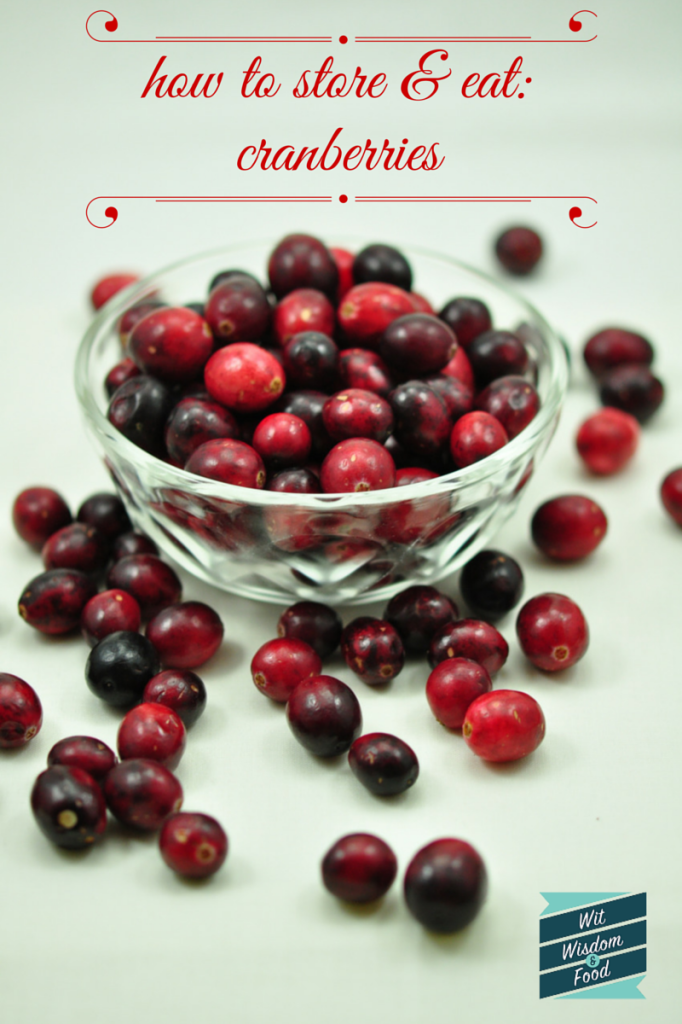
how to store and eat: cranberries

November 26, 2014 by anne 2 Comments

how to store & eat cranberries | wit wisdom & food

Cranberries: Cranberries found their place on the Thanksgiving table and it is doesn’t look to be giving it up any time soon. Whether you like it jellied, whole, with orange or some other variation a little cranberry will make it to you plate on Thursday.

Grown on shrubs or vines. When the fruit is ripe the field is flooded and a machine loosens the berries that then float on the water. I want to wade through a bog of cranberries like the guys in the Ocean Spray commercials.

Season: fall

What to look for when you buy: firm, brightly colored fruit

How to store it: toss them in the fridge for 3-4 weeks. Want cranberries all year round you can freeze the whole bag for 10-12 months.

How to prepare it: No prepping needed if you are cooking with cranberries.

My favorite way to use it: To string them between popcorn for christmas garland

Links to some great cranberries recipes:

Sparkling cranberries - These look beautiful but knowing cranberries are very tart I would hesitate to pop that in my mouth
Cranberry Buttermilk Breakfast cake - ‘Cause who doesn’t like cake for breakfast?
Butternut Squash Cranberry Bake - This sounds like a delicious option for our healthy fall dinners

Filed Under: ingredients, Uncategorized

  • 1
  • 2
  • 3
  • Next Page »

As a home cook and gardener, a former grocery store manager, and an advocate for improving our food system I have thousands of hours of research and real-world experience on how to get good food on our plates. My new challenge and my main focus is how to encourage my daughter to love food & eating as much as we do.

Search

Get a seat at the table

Follow the journey to help my daughter develop good eating habits and to know where her food comes from.

When you sign up you will get an easy to use digest of ideas and news for encouraging your kid to have good eating habits, to help you stay on top of trends and seasonal recipes.
* = required field

powered by MailChimp!

Post Calendar

November 2019
M T W T F S S
« Dec    
 123
45678910
11121314151617
18192021222324
252627282930  

Goodreads

Resources

  • Reading list
  • recipes
twitter pinterest instagram facebook mail

About

  • about
  • legal disclosures and privacy policy

Copyright © 2019 · Lifestyle Pro Theme on Genesis Framework · WordPress · Log in